
Understanding Meniere's disease
Meniere's disease is an inner ear disorder that affects balance and hearing. Learn more about the symptoms, possible causes and treatments for this condition.
Meniere's disease is a chronic disorder of the inner ear that causes episodes of vertigo, fluctuating hearing loss, tinnitus and a feeling of fullness in the ear. It can be unpredictable and disruptive, but with proper treatment and management, many people lead full, active lives.
Meniere's disease most commonly affects one ear, though it can eventually develop in both ears in some people.
What causes Meniere's disease?
The exact cause of Meniere's disease is not fully understood. It is believed to result from an abnormal build-up of fluid (endolymph) in the inner ear. This excess fluid disrupts the normal signals sent by the inner ear to the brain, causing the characteristic symptoms of the condition.
Several factors may contribute to the development of Meniere's disease, including:
Poor fluid drainage in the inner ear, possibly due to a blockage or anatomical abnormality
Autoimmune reactions in which the body's immune system attacks inner ear tissue
Viral infections affecting the inner ear
Genetic factors — Meniere's disease can run in families
Abnormal immune responses and allergies
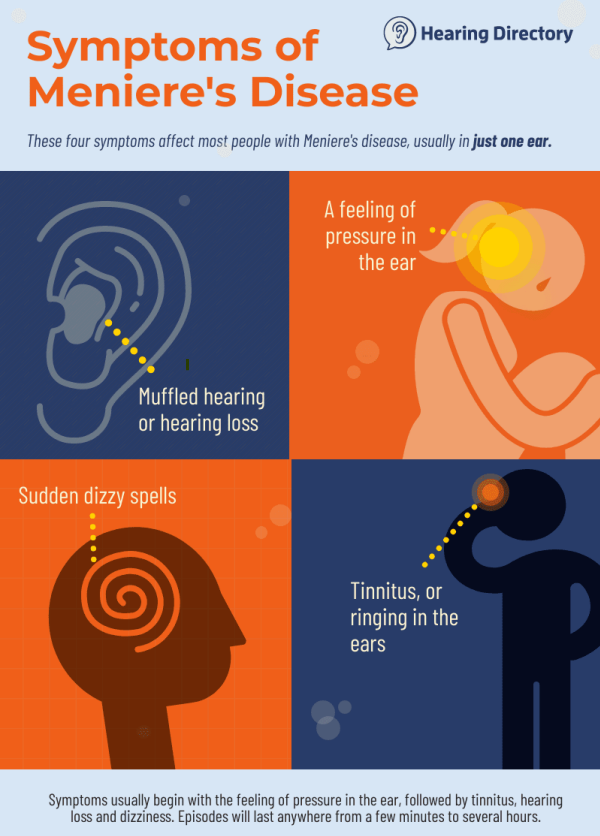
Symptoms of Meniere's disease
Meniere's disease is characterized by episodes (attacks) that can last anywhere from 20 minutes to several hours. Between attacks, some people feel completely well, while others experience ongoing symptoms.
Vertigo
Vertigo is the most disabling symptom of Meniere's disease. It is not simply dizziness — it is a sensation that you or the room around you is spinning or moving. Attacks can come on suddenly and without warning. They may be accompanied by nausea and vomiting. During a severe attack, it may be impossible to stand or walk.
Fluctuating hearing loss
Hearing loss in Meniere's disease tends to come and go, especially in the early stages. It typically affects low-frequency sounds first. Over time, the hearing loss may become permanent. High-frequency sounds and speech clarity can also be affected as the condition progresses.
Tinnitus
Tinnitus associated with Meniere's disease is often described as a roaring, buzzing or low-pitched ringing sound. It may come and go with attacks, or it may become constant over time. Tinnitus often becomes louder or more noticeable before or during a Meniere's episode.
Aural fullness
Many people with Meniere's disease experience a feeling of pressure, fullness or blockage in the affected ear — similar to the sensation of having water in the ear. This is known as aural fullness and is a common warning sign that an attack may be approaching.
Drop attacks
In some cases, Meniere's disease can cause sudden falls without warning, known as drop attacks or "otolithic crises of Tumarkin." The person remains conscious but loses their balance and falls without dizziness first. Drop attacks are associated with more advanced stages of Meniere's disease.
How is Meniere's disease diagnosed?
Meniere's disease is diagnosed based on your medical history and the results of hearing and balance tests. There is no single definitive test. Your audiologist or otolaryngologist (ear, nose and throat specialist) may recommend several assessments.
Videonystagmography (VNG)
VNG is a test that records eye movements to evaluate the function of the inner ear and the pathways between the inner ear and the brain. You will wear goggles equipped with infrared cameras while following moving lights and performing positional manoeuvres. Abnormal eye movements can indicate inner ear dysfunction.
Rotary chair test
The rotary chair test measures how well the inner ear and eyes work together to maintain balance. You are seated in a motorized chair that rotates slowly in a darkened room. Eye movement cameras track your responses. This test is particularly useful for detecting dysfunction in both inner ears.
Computerized dynamic posturography (CDP)
CDP evaluates how well you use visual, vestibular and sensory information to maintain balance. You stand on a platform that shifts or tilts while your balance responses are recorded. This test helps identify which systems are contributing to balance problems.
Electrocochleography (ECoG)
ECoG measures electrical activity in the cochlea in response to sound. An electrode is placed near or in the ear canal. Abnormal results may indicate excess endolymph pressure in the inner ear, which supports a diagnosis of Meniere's disease.
Hearing test
A full audiological assessment measures the type and degree of hearing loss in both ears. In Meniere's disease, hearing loss often affects low-frequency sounds in the early stages. Over time, it may affect all frequencies.
Treatment for Meniere's disease
There is no cure for Meniere's disease, but a range of treatments can reduce the frequency and severity of attacks and help manage symptoms.
Dietary changes
Reducing sodium (salt) intake is one of the most widely recommended lifestyle changes for managing Meniere's disease. High sodium levels in the body can increase fluid retention, which may worsen inner ear pressure. Your doctor may recommend:
Limiting sodium to 1,500–2,000 mg per day
Reducing caffeine and alcohol, which can act as diuretics and affect fluid balance
Staying well hydrated by drinking water consistently throughout the day
Eating regular meals to avoid large fluctuations in fluid intake
Medications
Several medications can help manage Meniere's disease symptoms:
Diuretics – Water pills help reduce fluid retention in the body, which may decrease inner ear pressure. Hydrochlorothiazide is commonly prescribed.
Anti-vertigo medications – Medications such as meclizine (Antivert) can reduce the severity of vertigo during an attack.
Anti-nausea medications – Prochlorperazine or dimenhydrinate may be used to manage nausea and vomiting during episodes.
Intratympanic steroids – Corticosteroids injected through the eardrum into the middle ear can reduce inflammation in the inner ear and decrease the frequency of vertigo attacks.
Intratympanic gentamicin – Gentamicin is an antibiotic that, when injected into the middle ear, reduces the activity of the affected inner ear. This significantly reduces vertigo attacks but carries a risk of further hearing loss.
Vestibular rehabilitation
Vestibular rehabilitation is a specialized form of physiotherapy that helps the brain adapt to changes in inner ear function. A trained therapist guides you through exercises designed to improve balance, reduce dizziness and help you return to normal activities. It is especially useful between attacks or after surgical intervention.
Hearing aids
Because Meniere's disease can cause progressive hearing loss, hearing aids are often recommended. Hearing aids not only help with hearing clarity, but some models also include sound therapy features that can help manage tinnitus.
Surgical options
Surgery is considered when other treatments have not provided sufficient relief. Options include:
Endolymphatic sac surgery – This procedure decompresses the endolymphatic sac, a structure involved in fluid regulation, to reduce inner ear pressure. It preserves hearing in most cases.
Labyrinthectomy – Removal of the inner ear. This eliminates vertigo attacks effectively but results in total hearing loss in the treated ear. It is only considered when hearing in the affected ear is already severely compromised.
Vestibular neurectomy – The vestibular nerve (responsible for balance signals from the inner ear) is cut, eliminating vertigo while preserving hearing. This requires neurosurgery and is performed under general anaesthetic.
Living with Meniere's disease
Managing Meniere's disease often involves identifying and avoiding personal triggers. Common triggers include:
High salt intake
Caffeine and alcohol
Stress and fatigue
Sudden changes in barometric pressure
Certain foods (processed foods, MSG)
Keeping a symptom diary can help you identify patterns and triggers. Many people find that with consistent lifestyle adjustments and the right treatment plan, they are able to significantly reduce the impact Meniere's disease has on their daily life.
When to see a specialist
If you experience recurring episodes of vertigo, fluctuating hearing loss or persistent tinnitus, see your doctor or audiologist as soon as possible. Early diagnosis and treatment can slow the progression of hearing loss and help you manage symptoms more effectively.
Hearing Directory lists trusted hearing clinics across Canada. A hearing care professional can conduct a full hearing and balance assessment and refer you to an otolaryngologist if needed.
Written by
Cara Jelinek
Aud (C), Reg. CASLPO, Audiologist and Clinic Manager
Aud (C), Reg. CASLPO, Audiologist and Clinic Manager Last updated on: February 21st, 2025